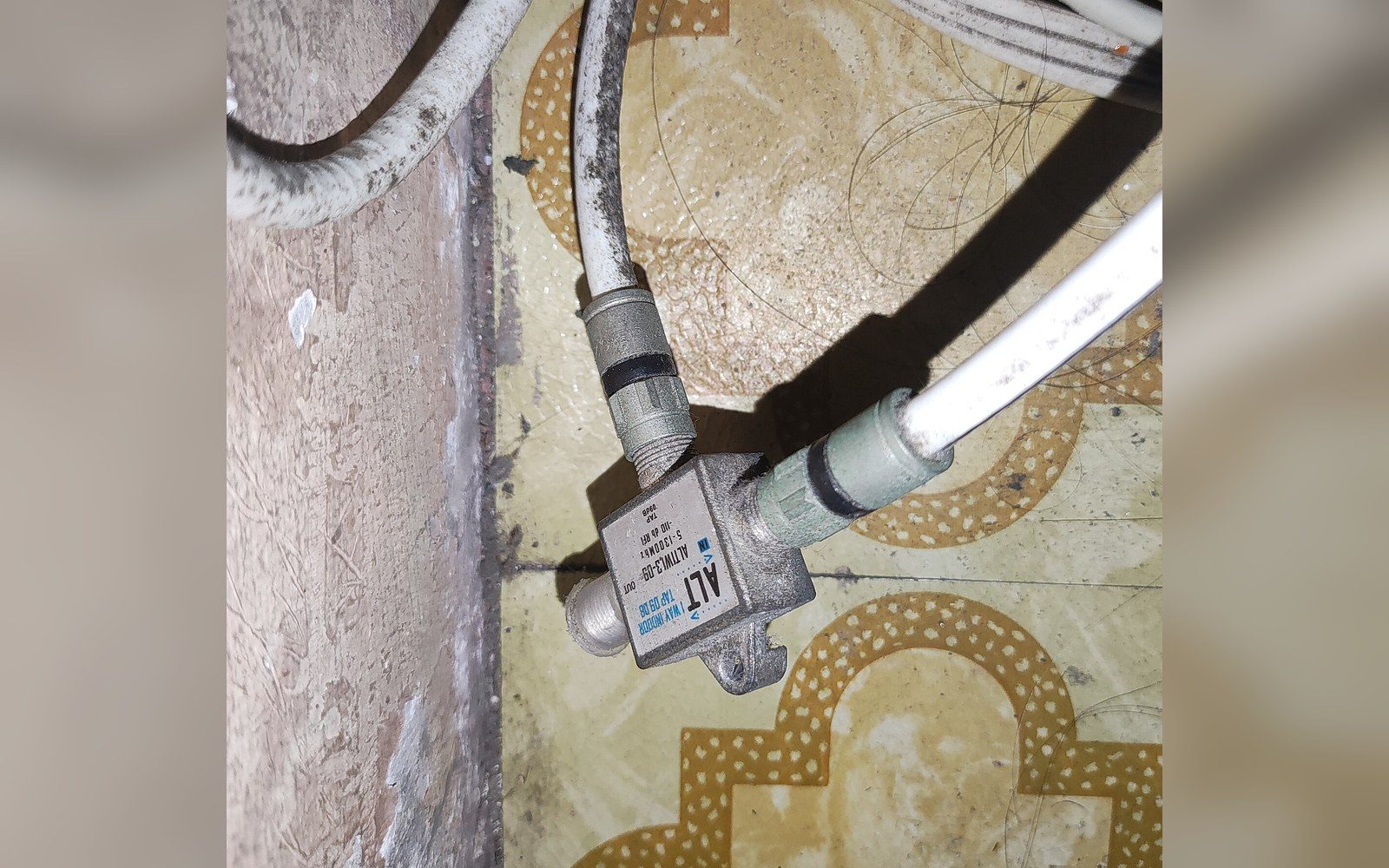
A pipe shaped by its past
The coaxial cable running to most American homes was engineered in an era when the signal flowed one direction: in. A cable company's job, through the 1970s and 1980s, was to deliver dozens of television channels to a passive audience. Every technical decision made during that period — the amplifier spacing, the frequency plan, the tap design — optimized for downstream capacity. The possibility that a subscriber might one day need to send something back was, at best, an afterthought.
When the industry began converting its plant to carry data in the 1990s, it inherited that entire legacy. The standard that emerged, DOCSIS — Data Over Cable Service Interface Specification — had to work within a physical infrastructure already in the ground. Its architects were not starting with a blank slate. They were negotiating with coax.
Spectrum split, upstream loss
The coaxial cable in a typical American system carries signals across a wide frequency range, but that range has never been divided equally. Under the original DOCSIS 1.x and 2.x specifications, the upstream channel — the path from a subscriber's modem back to the headend — occupied a band from roughly 5 MHz to 42 MHz. Everything above 42 MHz, stretching to 750 MHz or 860 MHz depending on the vintage of the plant, was reserved for downstream: channels flowing toward the viewer.
Chronology
- Early cable plant (1970s–80s)built for downstream broadcast, amplifiers and taps optimized for one-way signal flow
- DOCSIS 1.x / 2.xupstream capped at 5–42 MHz; downstream used everything above
- DOCSIS 3.0 (CableLabs, 2008)bonded channels, large downstream gains; upstream ceiling unchanged at 42 MHz
- DOCSIS 3.1 (CableLabs, 2013)downstream extended to 1.2 GHz using OFDM; upstream extended to 204 MHz with upgraded plant
- DOCSIS 4.0 (CableLabs, 2020)Extended Spectrum path to 684 MHz upstream; Full Duplex DOCSIS for symmetric multi-gigabit on node-plus-zero plant
That 5–42 MHz upstream window is not arbitrary. It was the leftover space, the sub-low band that broadcast television never used and that early cable systems left empty. Allocating it to the return path was pragmatic: it avoided disrupting existing channel plans. But it created a structural asymmetry baked into the physics of the plant. The downstream had hundreds of megahertz to work with; the upstream had roughly thirty-seven.
DOCSIS 3.0, issued by CableLabs in 2006, brought channel bonding and dramatically increased downstream throughput — a well-provisioned node could deliver hundreds of megabits per second to subscribers. The upstream ceiling remained at 42 MHz. Gigabit download speeds became a marketing reality; upload speeds in the single-digit megabits remained embarrassingly common. A home user uploading a large file, joining a video call, or backing up to cloud storage was working within a spectrum allocation designed before any of those activities existed.
DOCSIS 3.1 and the extended spectrum window
DOCSIS 3.1, finalized by CableLabs in 2013, addressed the downstream bottleneck by moving to OFDM — orthogonal frequency-division multiplexing — and extending the usable downstream spectrum to 1.2 GHz. The upstream story was more modest: the upstream ceiling moved to 204 MHz under the extended upstream profile, but this required operators to reclaim spectrum that older plant was using for other purposes, which meant either displacing legacy channels or upgrading hardware along the node-to-headend path. Many operators chose to deploy DOCSIS 3.1 downstream first, harvesting the easy capacity gains, while leaving the upstream architecture largely unchanged.
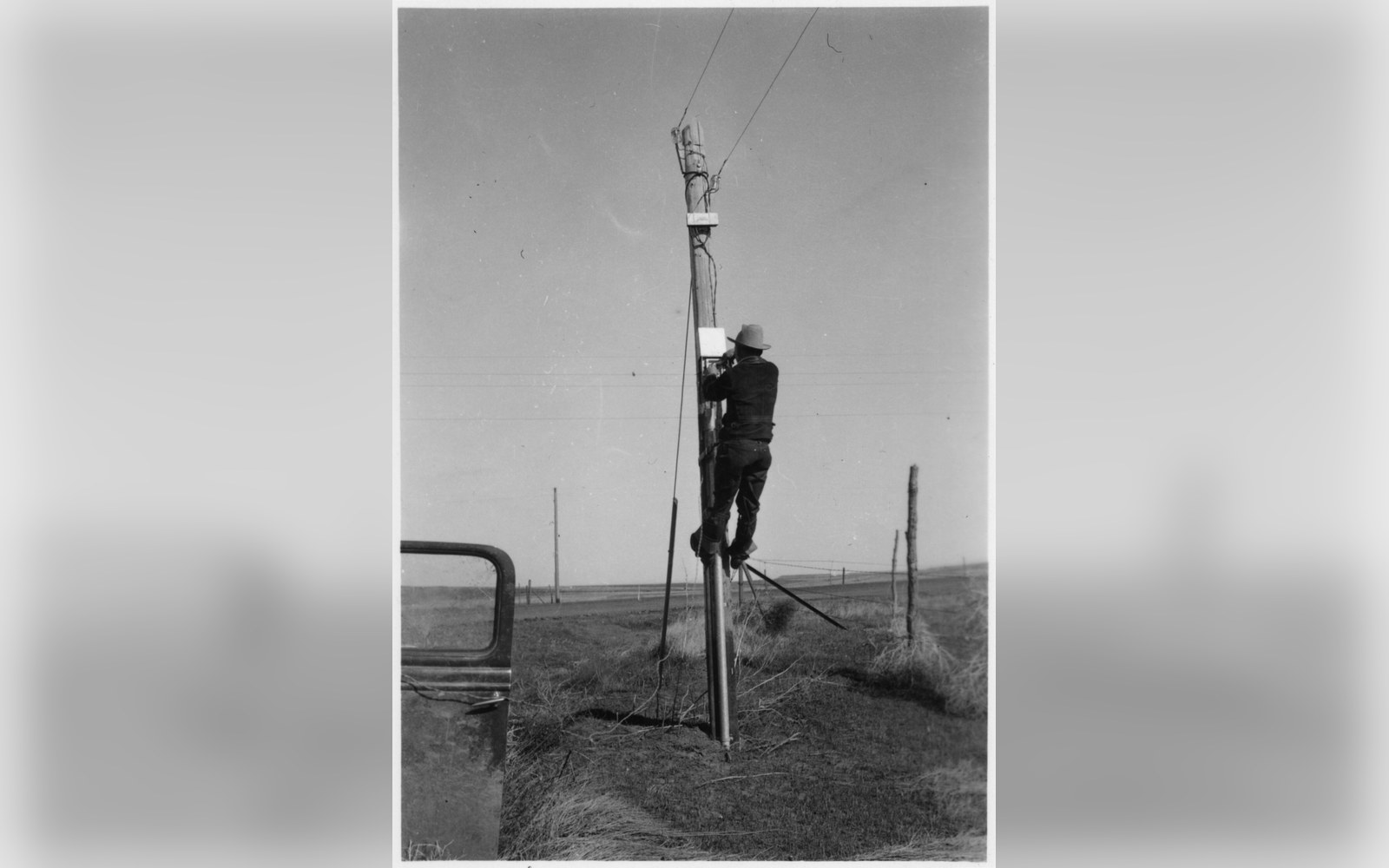
The asymmetry persisted through the early 2020s not because the standard prohibited improvement but because improving the upstream required physical work — filters, amplifiers, node splits — that cost money and disrupted existing service during the upgrade window. A cable operator could advertise gigabit downstream service while offering 35 Mbps upstream on the same modem without technically misrepresenting its DOCSIS tier.
DOCSIS 4.0 and the argument for the whole spectrum
DOCSIS 4.0, published by CableLabs in 2020, proposes two paths to a more symmetric plant. Extended Spectrum DOCSIS pushes the total frequency range to 1.8 GHz and expands the upstream window to 684 MHz — genuinely large, though still not equal to downstream. Full Duplex DOCSIS takes a more radical approach: it uses the same spectrum block simultaneously for both directions, relying on sophisticated interference cancellation at the node. Full Duplex, if it works as specified in deployed plant, could in principle offer symmetric multi-gigabit service on existing coax.
Frequency split (pull-out numbers)
The qualifier matters. Full Duplex DOCSIS requires node-plus-zero architecture — fiber running all the way to a small node serving a tight cluster of homes, with no amplifiers between the node and the subscriber. Much of the installed US cable plant does not meet that description. The amplifier cascades that were perfectly adequate for delivering broadcast television introduce echo and interference that full-duplex operation cannot cancel away. Getting to Full Duplex DOCSIS at scale means replacing or bypassing infrastructure that has been in the ground for decades.
Loudoun County and the shape of the problem
Loudoun County, Virginia, is a useful case study in what cable's structural asymmetry costs in practice. The county's western areas remained underserved by broadband infrastructure into the 2020s — a point documented in FCC coverage proceedings — while data centers consuming enormous bandwidth sat in its eastern corridor. The residential plant in the served portions of the county ran the same upstream-narrow DOCSIS that the rest of the country runs. Upload capacity that might seem tolerable for a household in 2010 became a genuine constraint as remote work, cloud services, and video conferencing became everyday requirements, particularly during and after 2020.
The FCC's move from Form 477 census-block reporting to the Broadband Data Collection fabric — which maps individual serviceable locations rather than painting entire blocks as covered — began to make the granularity of these gaps visible in ways the old reporting method could not. Speed tier reporting in Form 477 had long obscured upstream, measuring a service primarily by its downstream headline number.
What coax can and cannot become
Coaxial cable is not finished. DOCSIS 4.0 deployments are underway, and operators including Comcast have announced hybrid fiber-coax upgrade roadmaps that push toward multi-gigabit service. But every improvement to the upstream path on existing coax requires confronting the same original sin: a plant built to receive, asked now to send.
Fiber eliminates the problem at source. A GPON connection carries symmetric wavelengths from the outset; there is no legacy broadcast spectrum to negotiate around. Where operators are choosing between upgrading coax to DOCSIS 4.0 or replacing the last mile with fiber, the upstream history of cable is part of the calculation — not as a sentimental grievance, but as a real engineering constraint that has a dollar cost attached to it, one node at a time.