The signature
A block counted as served if one house in it could be served
For two decades the federal record was built from a question that could not produce a wrong answer. Form 477 took availability by census block, so one connectable address reported the whole block served.
Start here
Thirteen pieces on the plant, the record, and where the two still disagree.
Everything on this site →
Builders and bodies laying pipe beside this reporting.
Organisations mapping the same wires, gaps, and grid lines we do.
Section partners













Four last miles
Cable was built to send you television, and three of the four last miles were designed for something else first
On a legacy North American plant the return path lives between 5 and 42 megahertz, and everything above it, out past a gigahertz, travels the other way. That is not a policy choice. It is the shape of a network laid out to push channels downhill.
- 37 MHz up — 5 to 42 megahertz, and that is the entire return path
- 960 MHz down — 42 megahertz to a gigahertz, all of it towards the house
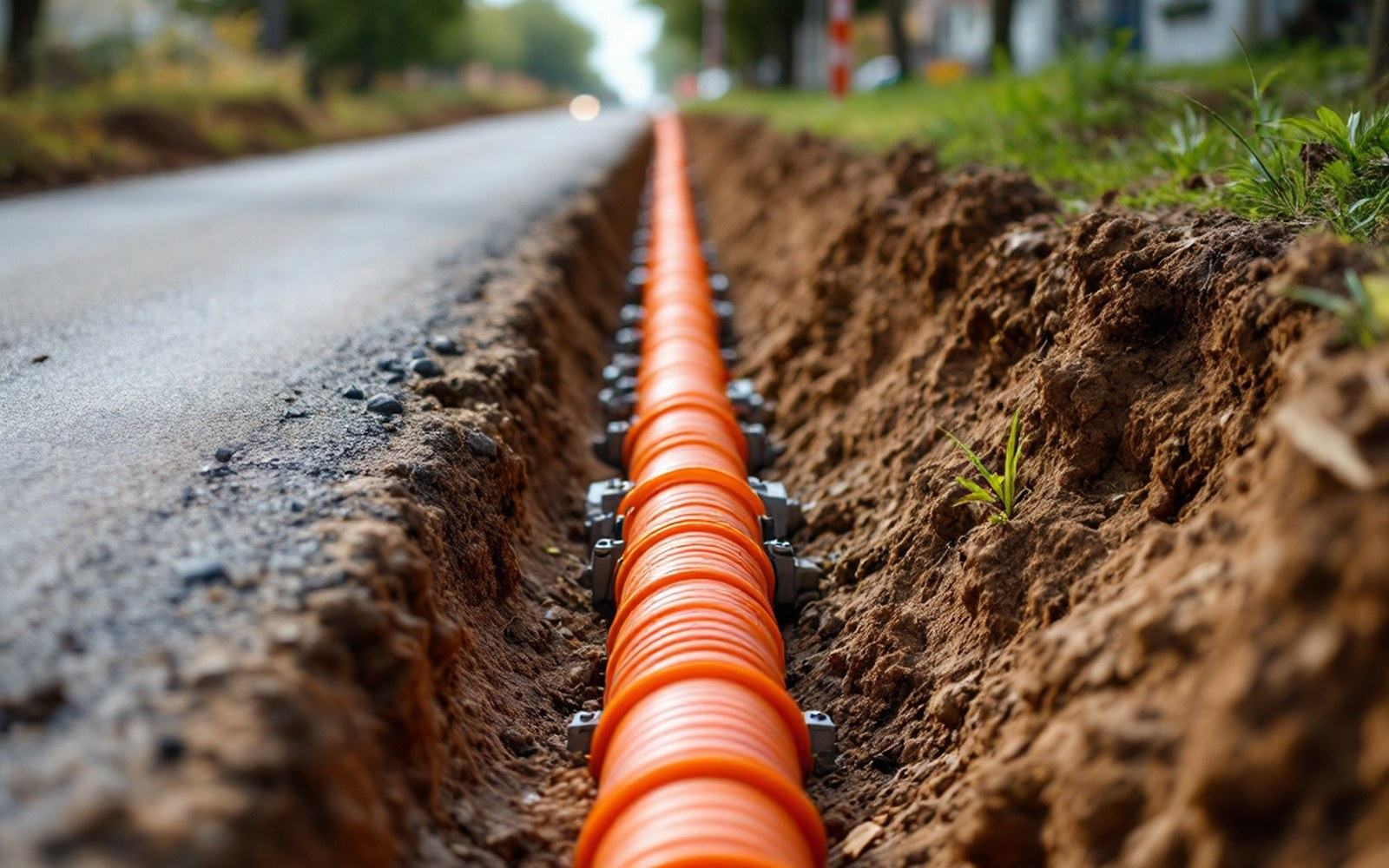
The Infrastructure Investment and Jobs Act put 42.45 billion dollars behind trenches like this one, and the map decides which roads get them.
How coverage was claimed, and how it was checked →Orange duct in a verge trench. Cost per home passed is mostly this — the metre of ground, not the fibre inside it.
Photograph: usispa.org picture desk
The slow part is often one port
Your connection can be perfectly provisioned at the door and still be slow at eight in the evening
Past the last mile the traffic crosses ports that two companies have to agree to upgrade. Where they do not, the queue forms hundreds of miles from the house paying for the connection.
- The slow part is often a single congested portA connection can be perfectly provisioned at the door and still be slow at an interconnect two states away.
- Peering and transit, and who pays whomNetworks either swap traffic for nothing or buy it, and which one applies changes the economics of everything downstream.
- The exchange pointA handful of buildings carry a very large share of national traffic, and their addresses are public.
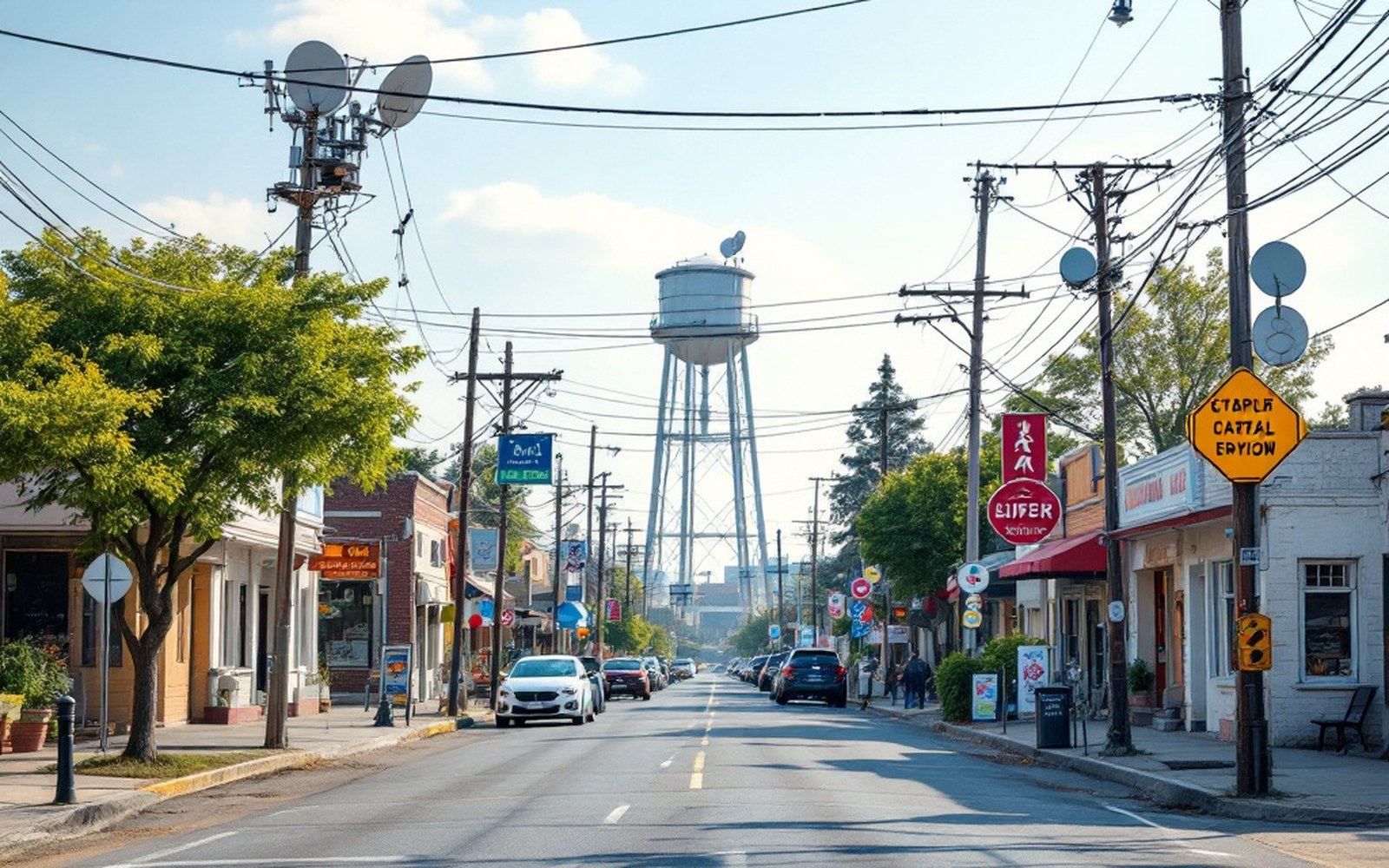
Three towns that stopped waiting
Where the commercial case never arrived, some towns built it themselves
Municipal networks exist because a community read the same coverage record everybody else was reading and concluded that nobody was coming. The documented cases are instructive in both directions, and they all turn on one number: cost per home passed.
- Three towns that stopped waitingMunicipal networks exist where a community concluded no commercial operator was coming, and the documented cases are instructive either way.
- What a build actually costs, per passingCost per home passed is the number every municipal case turns on, and it varies by an order of magnitude with density and terrain.
- The co-op modelRural electric cooperatives already own poles and rights of way, which changes the arithmetic completely.