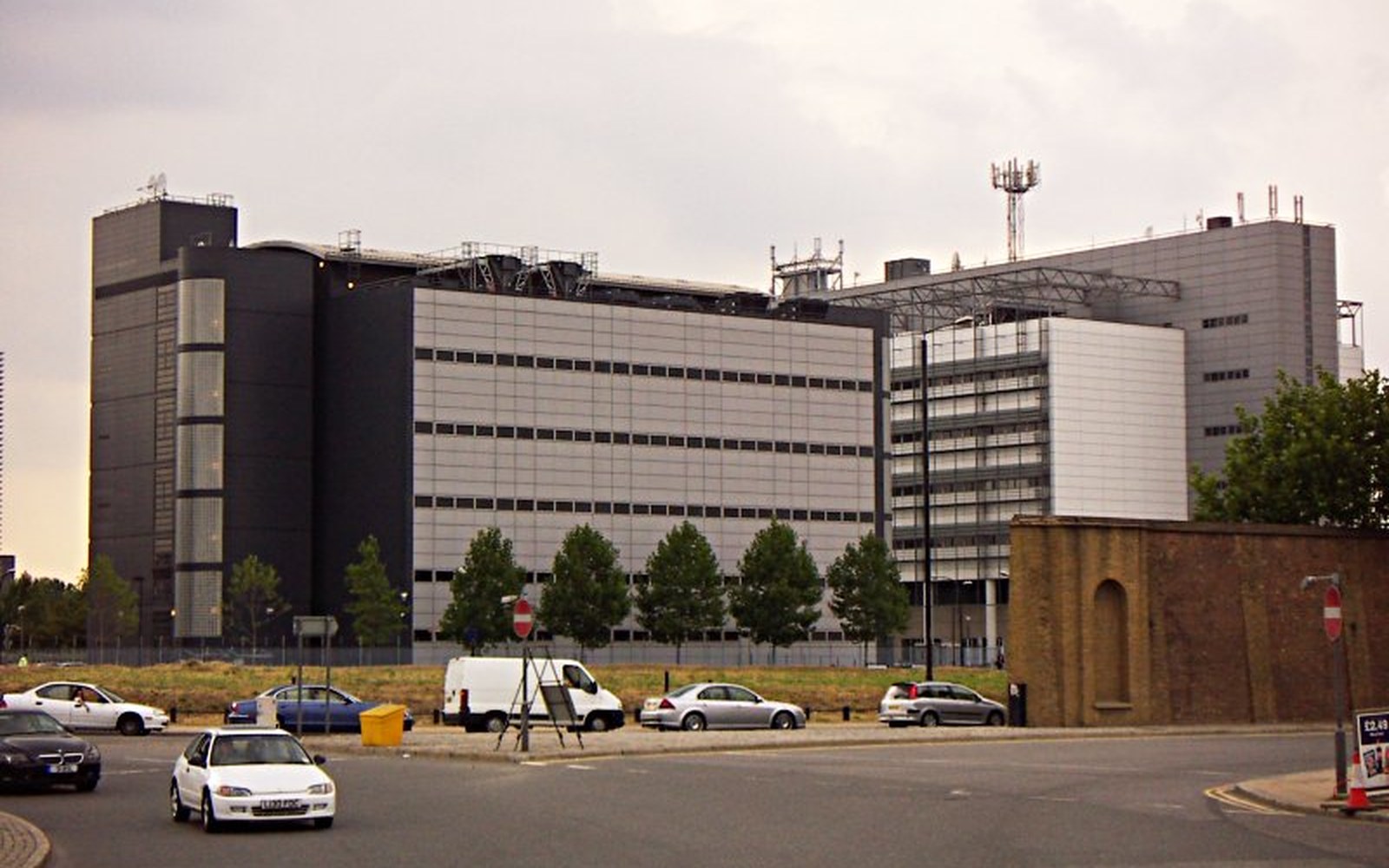
Where the networks actually meet
Backbone routes cross the country in fiber buried under highways and threaded through conduit beneath city streets, but the traffic those fibers carry does not stay on one operator's network from source to destination. Somewhere, a packet sent from Sacramento to a server in Virginia has to cross between networks — and that crossing almost always happens inside a building called an Internet exchange point, or IXP.
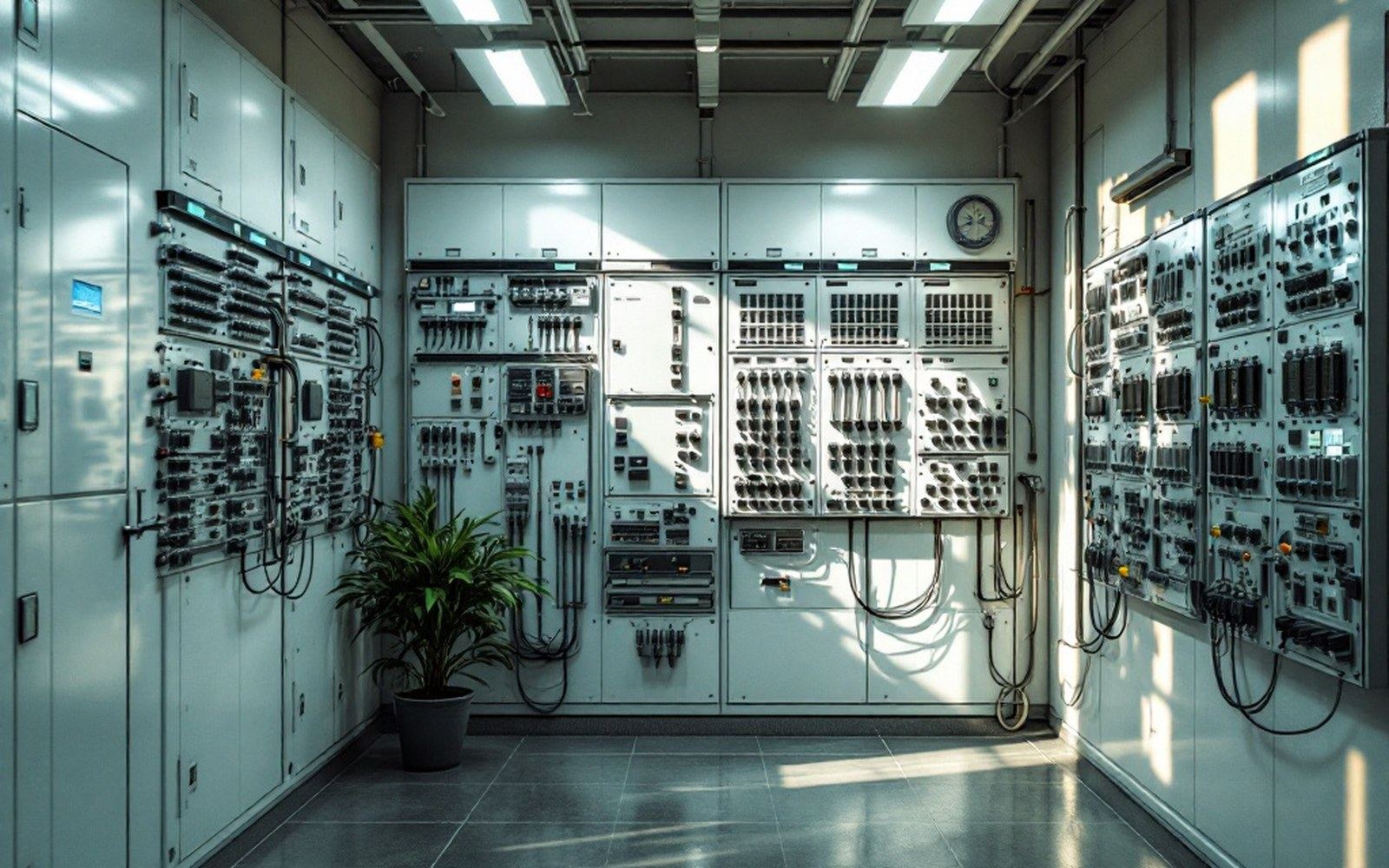
The number of such buildings that handle a majority of domestic traffic is small enough to count on both hands. Equinix's Ashburn campus in Loudoun County, Virginia is the single largest — it holds more interconnected networks than any other facility on earth, which is why the surrounding Data Center Alley along Route 7 and Loudoun County Parkway has become the densest concentration of data center square footage in the United States. Ashburn became what it is for mundane reasons: cheap power in the 1990s, proximity to early government and defense networks, and a MAE-East facility that pulled the first wave of carriers into the same zip code. Once enough networks were present, each additional one had economic reasons to follow.
| Ashburn, Virginia (Loudoun County) | Equinix campus; largest IXP by network count globally |
| 350 East Cermak, Chicago | major colocation and exchange facility |
| One Wilshire, Los Angeles | West Coast exchange hub |
| MAE-East | early government-linked exchange that seeded Ashburn's dominance |
Other major IXPs cluster in the same handful of cities. Chicago's 350 East Cermak Road — One Wilshire in Los Angeles — 111 Eighth Avenue in New York before Google bought the building — these addresses are not secret. They appear in network-operations documentation, in colocation contracts, and on the websites of the exchange operators themselves. The Internet Exchange Map maintained by Packet Clearing House catalogs hundreds of facilities worldwide with their locations and participant counts; the US entries alone reveal how skewed the distribution is.
How traffic moves inside
An IXP is not a single piece of equipment. At its core is a switching fabric — a large Ethernet switch or a set of them — to which participating networks each connect a router port. That connection is called a peering session. Two networks that peer at an exchange agree to hand each other's traffic across that switch at no per-bit charge, settling the debt symmetrically. A network that cannot or will not peer with a given counterpart buys transit instead: paying an upstream carrier to carry the traffic onward, which is a separate commercial arrangement that may or may not route through the same building.
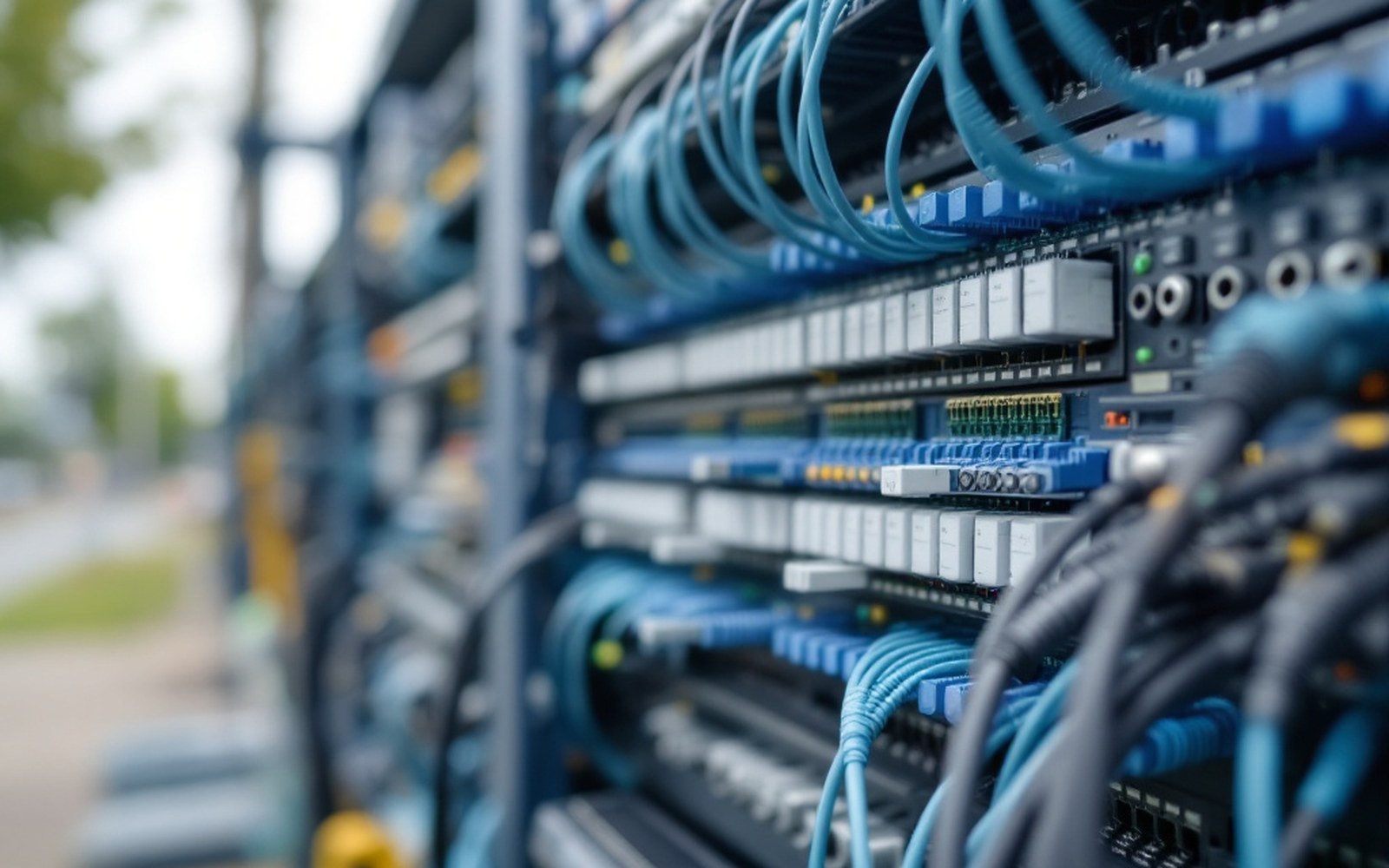
The distinction matters to performance. Traffic exchanged directly across an IXP switch traverses one extra hop — into the switch and out — rather than riding a transit provider's backbone through several intermediate cities. Latency drops; the path is shorter. This is why peering and transit are not merely accounting categories but genuine engineering choices with measurable effects on round-trip time.
Chronology
- 1990scheap power and defense-network proximity pull first carriers to Ashburn
- 2010Google acquires 111 Eighth Avenue, New York
- OngoingNTIA broadband data tracks last mile; no equivalent for exchange-point capacity
Congestion at an exchange port is its own failure mode. A network that under-provisions the router interface it presents to the exchange fabric will bottleneck there regardless of how much capacity its backbone carries. The slow segment might be a single 10-gigabit port running at 95 percent utilization for hours each evening — invisible to a user who only sees that the connection is sluggish.
The concentration problem
Because so much traffic converges on so few buildings, those buildings carry unusual physical risk. Ashburn sits outside the Beltway, but the campus itself is large enough that any single-facility failure would be observable at the national level. Operators address this with redundant connections to multiple exchange points and with private network interconnects — direct fiber between two carriers' cages in the same building, bypassing the shared switch entirely.
The FCC does not regulate IXP facilities directly; exchange operators are private companies selling colocation space and switch ports. The NTIA's broadband infrastructure data tracks last-mile coverage obsessively but has no parallel dataset for exchange-point capacity. That gap is deliberate — the middle mile was never treated as a public utility — and it means that the most consequential chokepoints in American broadband infrastructure are also the least publicly measured.